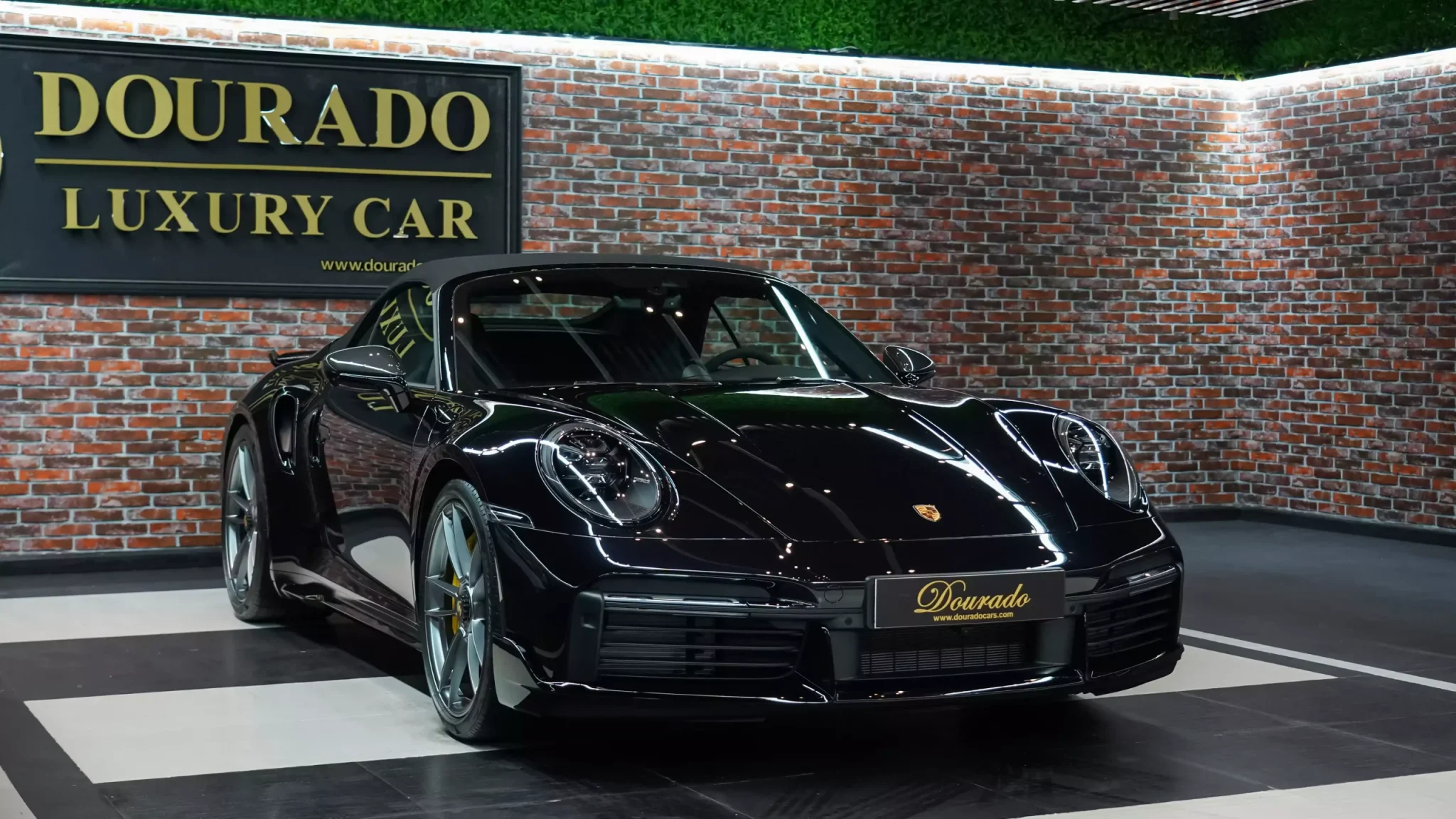
Introduction: The Legend in the Fast Lane
The Porsche 911 Turbo commands respect in the world of supercars. For decades, it has set benchmarks for performance and engineering. In addition, its unmistakable silhouette is an icon among enthusiasts and collectors alike.
However, not every 911 Turbo is the same. Rare editions, technical progress, and unmatched capability set it apart.
The Evolution of the 911 Turbo: Model History & Rare Editions
Since its debut in 1975, the 911 Turbo has defined the term “everyday supercar.” Back then, it shocked the world with a 3.0-liter turbocharged flat-six engine. As a result, Porsche blended wild acceleration with daily practicality.
Over time, engineers sculpted many generations. Some became true unicorns in the collector world.
Key Generations and Rarity
- 930 Turbo (1975–1989): Known as the original widowmaker, celebrated for its fearless character.
- 964 Turbo (1990–1993): Limited production, especially with the 3.6-liter model, now a blue-chip collectible.
- 993 Turbo (1995–1998): Marked the final air-cooled era, with only a handful of S and Turbo S versions produced.
- 996 Turbo (2001–2005): First water-cooled Turbo, infamous for the ultra-limited 996 GT2 based on Turbo foundations.
- 997 Turbo/997 Turbo S (2006–2012): Provided both manual and PDK transmissions, with the limited 997 Turbo S Edition 918 Spyder.
- 991 Turbo/991 Turbo S (2014–2019): More tech, more power, with high demand for the Exclusive Series.
- 992 Turbo/992 Turbo S (2020–present): Current champion with mind-bending power and sophistication.
Meanwhile, special versions like the Turbo S Exclusive Series, limited to just 500 cars worldwide, have become instant collectibles.
Performance Pedigree: Motorsport-Inspired Engineering
Porsche developed the Turbo formula in motorsports. The key has always been relentless performance.
For example, the latest 992 Turbo S rockets from 0 to 100 km/h in under 2.8 seconds. That is faster than many mid-engine exotics.
Furthermore, turbocharged engines from the 930 to the 992 share key elements: rear-engine layout, flat-six construction, and progressive turbo tech. The result is explosive acceleration and surprising grip.
Similarly, Porsche poured endurance racing knowledge into cooling, aerodynamics, and drivetrains. Therefore, the 911 Turbo manages racetrack pace while remaining utterly drivable on real roads.
How the 911 Turbo Stacks Up
- Direct-injected flat-six engines with turbocharging
- Variable all-wheel drive for optimal traction
- Rear-axle steering for agility; present since 991
- PDK dual-clutch transmissions for speed
- Ceramic brakes for fade-free stopping power
Consequently, every new Turbo generation redefines what is possible in a road car.
Interior Craftsmanship & Modern Technology
Porsche never skimps inside the 911 Turbo cabin. Instead, every detail showcases the brand’s commitment to quality.
Moreover, the latest 992 Turbo features full leather, real metal, and optional carbon fiber trim. Sports seats provide support for aggressive driving while maintaining comfort for daily use.
In addition, the advanced infotainment system keeps you connected, while options such as the Burmester sound system add premium features. Owners can personalize almost every aspect, ensuring each Turbo fits the owner’s personality.
Comparison with Supercar Rivals
Meanwhile, how does the 911 Turbo measure up against rivals like the McLaren 720S or the Ferrari F8 Tributo?
The 911 Turbo may not scream as loudly as its Italian rivals, but it makes up for it with reliability, usability, and comfort. Plus, all-weather performance is a huge advantage—thanks to all-wheel drive engineering and rigorous testing.
Similarly, its resale value frequently outpaces competitors, thanks to Porsche’s brand reputation and the model’s desirability.
Collector Appeal: Rarity, Investment, and Future Value
As a result, rare editions escalate in value. The 993 and 964 Turbo S are prime examples, with auction prices climbing well beyond initial MSRPs.
In contrast, the newest 992 Turbo S Exclusive might soon follow a similar trajectory. For collectors, originality and documented history are key factors driving investment potential.
For example, Porsche offers Classic certification to maintain provenance—essential for the serious investor.
Ownership Experience: What to Expect
For many, driving a 911 Turbo is a dream come true. Its balance of daily comfort, reliability, and epic performance separates it from other supercars.
In addition, Porsche’s unrivaled service network ensures parts and expertise are never far away.
However, maintenance costs can be high, particularly for rare editions with specialized components. Therefore, prospective buyers should do their homework and verify history and documentation before purchase.
Regional Market Insights: The 911 Turbo in Dubai
Dubai’s car scene is famous for high-end, rare supercars, and the 911 Turbo enjoys a strong presence. In Dubai, buyers often customize their vehicles through Porsche Exclusive Manufaktur for unique paint and interior combinations.
Similarly, limited-edition Turbos hold particular appeal in the region. Collector demand for rare specs is high, often commanding premiums above global averages.
For the latest trends and builds, check trending_keyword at Onyx Concept and our blog.
For those in Dubai searching for certified or rare 911 Turbo models, detailed listings are available at DouradoCars Stock.
The Road Ahead: Why the 911 Turbo Remains Supreme
Today, the 911 Turbo stands at the intersection of tradition and innovation. For over 45 years, it has evolved continuously to meet and beat back the competition. It is a driver’s car, a status symbol, and an engineering marvel in every sense.
With every new model and exclusive edition, Porsche proves the 911 Turbo remains a singular experience in the supercar world.
For a quick visual overview, watch the video.
In conclusion, if you are considering joining the elite group of 911 Turbo owners, smart research and guidance are vital. For current stocks and detailed specs, check our listings for the ideal match.