
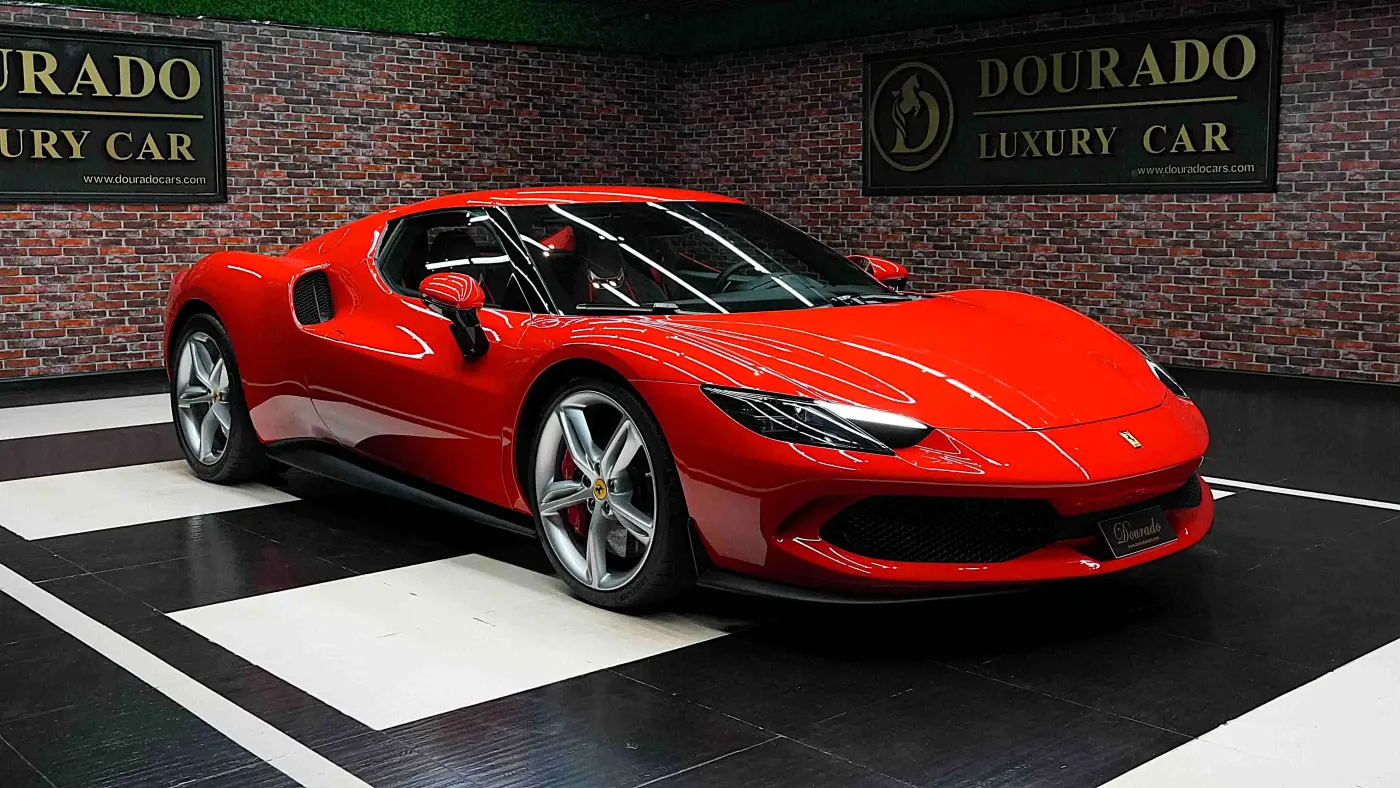
Anyone shopping for a luxury or exotic car in Dubai eventually runs into the same question: does it really matter whether a car is GCC spec or American spec? The debate around GCC vs American spec cars: which is better for UAE roads & climate isn't just internet chatter - it has real consequences for how a car copes with 45-degree summers, how easily it clears registration, and how much it's worth when you eventually sell it. A good example of the difference done right sits on our showroom floor right now: a 2023 Ferrari 296 GTB in Rosso Corsa, built to full GCC specification with its 819hp V6 hybrid powertrain ready for exactly the conditions it will be driven in.
Before diving into the technical differences, it helps to understand why this conversation even exists. Cars built for the American market are engineered around US federal and state regulations, cooler average climates, and different fuel standards. Cars built for the Gulf Cooperation Council region - the UAE, Saudi Arabia, Qatar, Kuwait, Bahrain and Oman - are engineered specifically for extreme heat, high-speed desert driving, and long stretches of highway use. When you browse a serious luxury cars for sale in Dubai inventory, this distinction quietly shapes which cars are the smarter long-term buy, regardless of how identical two vehicles might look side by side.
Take Ferrari as an example, since it's a brand where these differences are well documented. A GCC-spec Ferrari, such as the 812 GTS in our current collection, is calibrated from the factory for regional fuel quality, higher ambient temperatures, and the electrical demands of running air conditioning at full capacity for hours at a time in stationary Dubai traffic. American spec cars, by contrast, are tuned around a completely different climate profile and emissions framework, which means components that never see real strain in Los Angeles or Miami can be pushed far harder on Sheikh Zayed Road in August.
What "Spec" Actually Changes Under the Skin
The word "spec" refers to far more than badges or which side of the car the fuel filler sits on. It covers cooling system calibration, alternator output, suspension tuning for road surface types, headlight and indicator configurations, and even the software mapping that governs how an engine manages heat soak. GCC-spec vehicles typically feature uprated radiators, stronger alternators to support constant air conditioning load, and suspension geometry that has been tested on the kind of long, flat, high-speed roads common across the Emirates. American spec vehicles are calibrated instead for a mix of urban stop-start driving, colder average temperatures, and different octane fuel standards.
None of this is a knock on American engineering - it's simply a matter of the car being built for a different operating environment. The issue arises when an American spec car is imported into the UAE and expected to perform identically to one built with this climate in mind. Small compromises - a marginally weaker AC compressor, a cooling system with less headroom, electronics not rated for prolonged extreme heat - rarely show up in the first year of ownership, but they tend to surface exactly when you can least afford them to.
Climate Considerations: Why GCC Spec Has the Edge
Dubai's climate is not a mild inconvenience to be engineered around - it is one of the most demanding automotive environments on earth for eight months of the year. Ambient temperatures regularly exceed 45°C, and interior cabin temperatures in parked cars can climb well beyond that. GCC-spec vehicles are built with this reality as the baseline, not an edge case. Larger cooling capacity, heat-resistant interior materials, and battery and electrical systems rated for sustained high temperatures all come standard, rather than being an afterthought.
This matters just as much for high-performance machinery as it does for daily drivers. A hybrid V6 supercar like the Ferrari 296 GTB, for instance, manages a genuinely complex thermal balancing act between its combustion engine, electric motor and battery pack. Buying it in GCC specification means that balancing act has been engineered and validated specifically for UAE conditions from day one, rather than adapted after the fact. You can read more about Ferrari's engineering approach to its hybrid platforms directly via Ferrari's official site.
Registration, Warranty and Regulatory Compliance
Beyond climate, there's a practical, paperwork-driven reason GCC spec tends to be the smoother path in the UAE: regulatory alignment. GCC-spec cars are built to conform with regional standards from the outset, which typically means a more straightforward registration process through RTA and fewer complications around emissions or lighting compliance. American spec vehicles can sometimes require modifications - to headlights, bumpers, or emissions equipment - before they satisfy local requirements, adding time and cost that isn't always obvious at the point of purchase. Warranty support is another consideration worth taking seriously. Manufacturer warranties and authorised service programmes are generally structured around specific regional markets. A GCC-spec car bought through an authorised regional channel is far more likely to enjoy full manufacturer backing and access to region-specific service bulletins than a grey-import American spec equivalent, where warranty terms can be murkier and parts availability slower.
Resale Value: The Long-Term Financial Reality
Resale value is where the GCC vs American spec debate becomes most tangible for buyers. In the UAE's active pre-owned luxury market, GCC-spec cars consistently command stronger resale confidence. Buyers here know exactly what they're getting - a vehicle built, tested and warrantied for this exact climate and road network - and that certainty translates into demand. American spec imports, even well-maintained ones, often face more scrutiny from buyers and appraisers precisely because of the climate and compliance questions outlined above. This is one reason our own collection - from the Ferrari Roma to the wider Ferrari collection - leans heavily on GCC-spec vehicles wherever possible. It isn't just about performance on day one; it's about protecting value over the years a car spends in Dubai's hands, sun, and traffic.
The Ferrari 296 GTB: A GCC-Spec Case Study
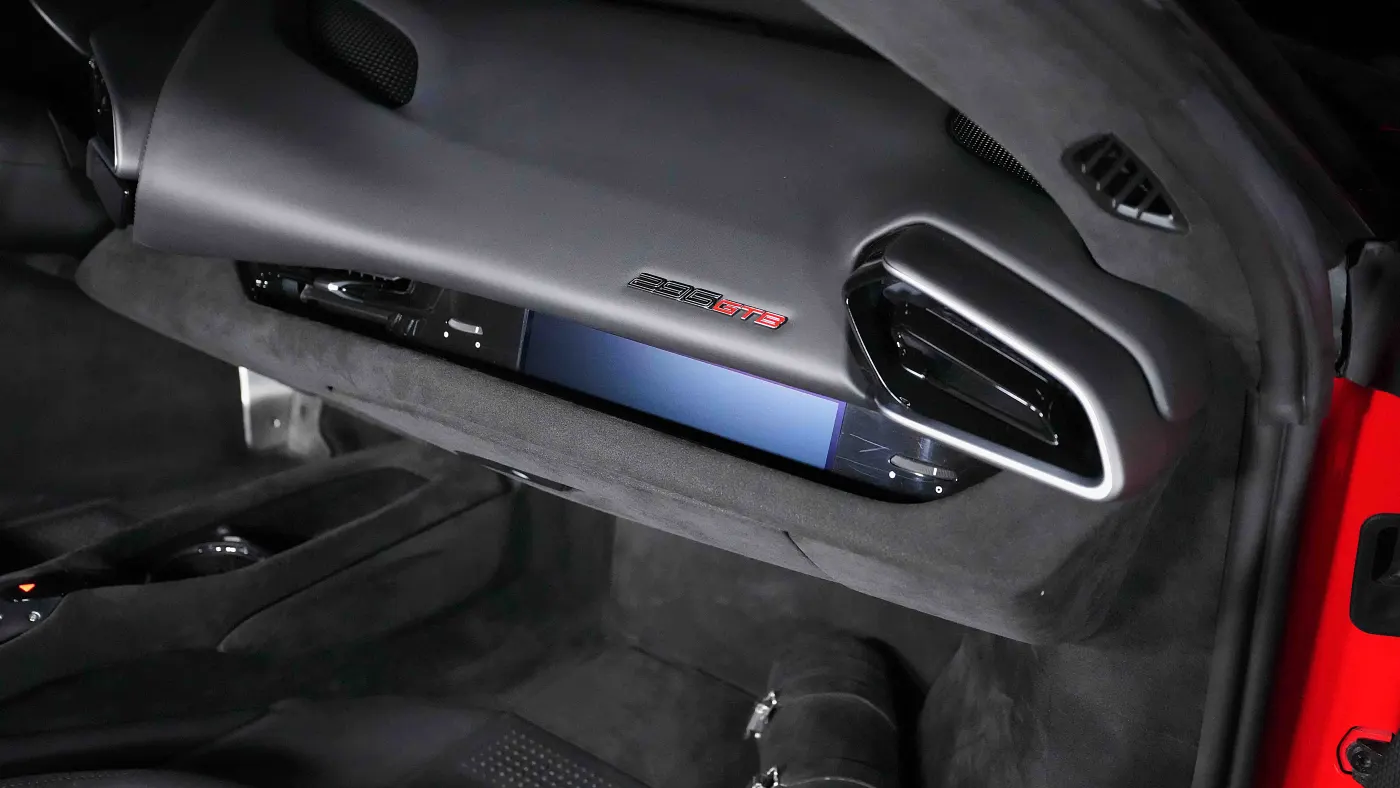
The 2023 Ferrari 296 GTB currently on our floor illustrates the point well. Finished in Rosso Corsa and built to full GCC specification, it pairs a 663hp twin-turbo V6 with an electric motor for a combined 819hp output - a genuinely serious performance figure, delivered through a powertrain whose thermal management has been validated specifically for Gulf conditions rather than adapted for them after import. For a car this technically ambitious, that distinction isn't a footnote; it's central to how confidently it can be driven hard on UAE roads, in UAE heat, for years to come.
Making the Right Call for Your Own Garage
If you're weighing up a purchase, the practical advice is straightforward: unless you have a very specific reason to consider an American spec import, GCC specification is the more sensible default for anyone planning to keep and drive their car in the UAE long-term. It's engineered for this heat, this road network, and this regulatory environment - and it tends to hold its value accordingly when the time comes to sell or trade in.
If you'd like to see the difference for yourself, our team at Dourado Luxury Cars would be glad to walk you through the specification details on any car in our showroom, including the GCC-spec Ferrari 296 GTB. Visit us in Al Quoz or browse our full inventory of supercars online to find the right car, built the right way, for the roads you'll actually be driving.