
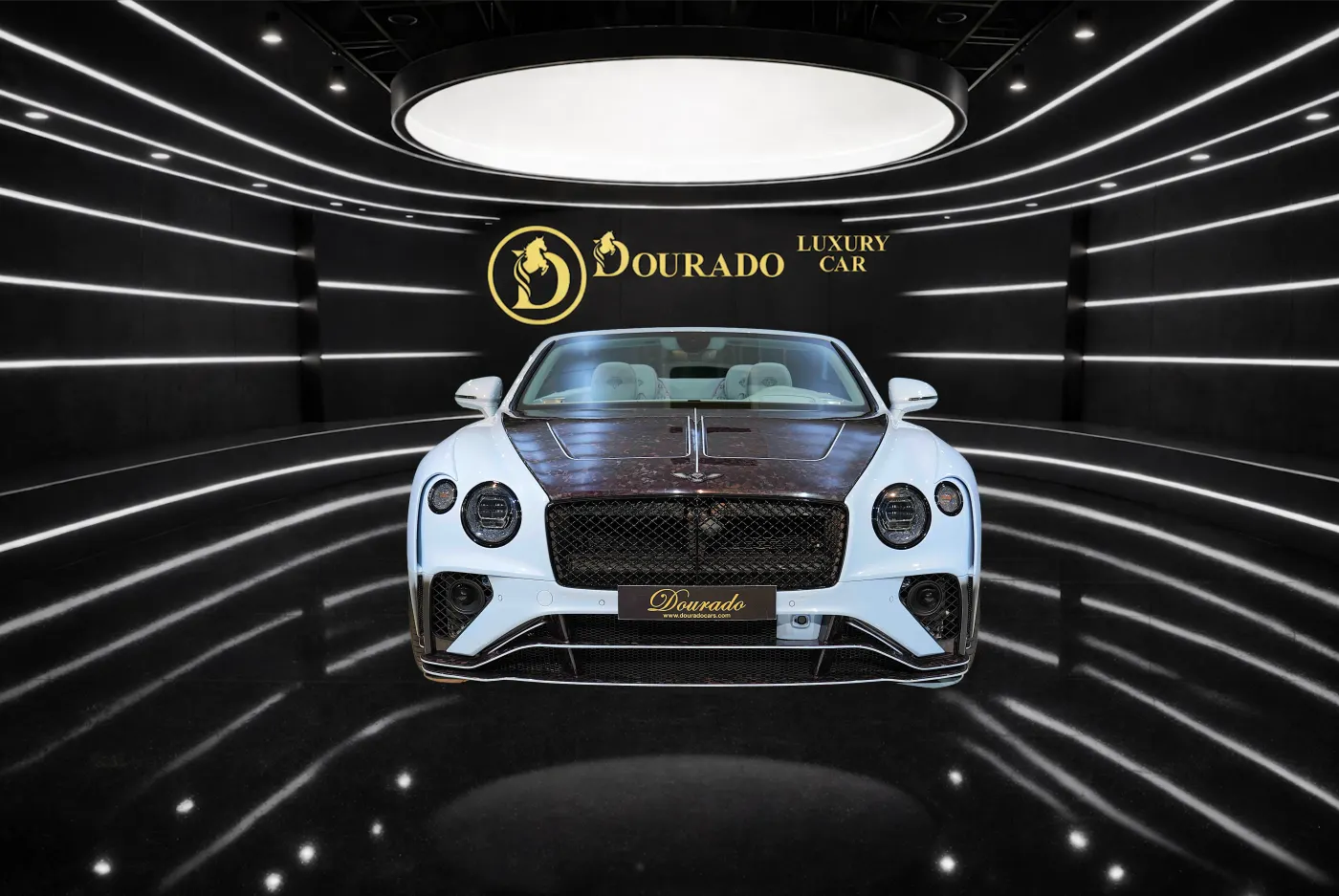
A limited-production Ferrari, a black-badge Rolls-Royce, or a bespoke G-Class should never be chosen from a few flattering photographs. Virtual showroom luxury cars give serious buyers a far clearer view of what is actually available: the exact specification, cabin finish, exterior details, mileage, condition, and character of the vehicle before an inquiry is made.
For buyers who value their time, this is not a substitute for a physical inspection. It is the intelligent first stage of one. A properly presented virtual showroom allows you to narrow a vast choice of exceptional vehicles to the few that genuinely deserve your attention - whether you are in Dubai, elsewhere in the UAE, or buying from abroad.
What a Virtual Showroom Should Show You
Luxury vehicles are defined by details that a standard listing can easily miss. The shade of leather, carbon-fiber weave, wheel finish, rear-seat configuration, and even the way light moves across a satin paint finish all affect a buying decision. That is why the quality of the digital presentation matters as much as the number of vehicles displayed.
A serious virtual showroom begins with high-resolution exterior imagery taken from every meaningful angle. It should let you study panel alignment, paintwork, wheels, brake calipers, lighting signatures, exhaust finishers, and the visual impact of any bespoke conversion. On a highly customized Onyx Concept, Novitec, or Lumma vehicle, those details are central to its appeal and value. The Rolls-Royce Cullinan Black Badge by Onyx Concept is a menacing masterpiece of bespoke luxury, featuring a striking satin black exterior, aggressive aerodynamic enhancements, and dark chrome accents that amplify its commanding road presence.
The interior deserves the same scrutiny. A 360-degree cabin view gives buyers the ability to assess seating, dashboard architecture, trim materials, rear accommodation, headliner, infotainment layout, and the condition of high-touch surfaces. In an ultra-luxury car, the cabin is not a secondary consideration. It is often the reason one configuration stands apart from another.
Video walkarounds add another level of confidence. Still images are excellent for close inspection, while video gives the car proportion, presence, and a more natural sense of its finish. It can also clarify details that are difficult to understand in static photography, such as forged wheel designs, wide-body styling, illuminated interior elements, or the depth of a pearl-effect color.
Virtual Showroom Luxury Cars Need Real Specifications
Visual access is powerful, but it should always be supported by accurate vehicle information. Buyers comparing a Lamborghini Revuelto, Ferrari 296 GTB, Bentley Bentayga, or Mercedes-Maybach S-Class are not simply comparing names. They are comparing model year, mileage, drivetrain, equipment, special-order options, service history, warranty position, and availability.
A detailed listing should make those distinctions easy to identify. It should state the exact model, model year, mileage, engine and transmission where relevant, and key options that influence desirability. For collectible or limited-edition cars, provenance and edition status may matter as much as performance figures. For an executive luxury SUV, rear-seat specification, premium audio, driver-assistance equipment, and factory personalization can be decisive.
There is also a practical reason to insist on detail. Two apparently similar cars can have substantially different market positions. One may be a highly specified example with rare factory options and specialist enhancements; another may have a more standard configuration. A virtual showroom cannot make that judgment for you, but it should give you enough honest information to ask the right questions quickly.
Why This Changes the Way Buyers Search
The traditional luxury-car search can be unnecessarily fragmented. A buyer may move between dozens of listings, try to interpret inconsistent photos, and spend time discussing vehicles that are not truly aligned with their requirements. An immersive online showroom changes the sequence.
Instead of beginning with a visit and hoping the right car is present, buyers can first evaluate an extensive, owned inventory at their own pace. Brand filters and model-specific information help refine the search, while detailed visuals make it easier to compare a Silver Cullinan against a dark-spec Ghost, or a factory Ferrari against a more aggressive customized alternative.
This is especially valuable for international clients and collectors whose schedules are not built around dealership hours. The ability to assess a vehicle carefully before speaking with a specialist keeps the conversation focused. By the time you inquire, you can discuss the specification that matters, request further confirmation on a particular feature, and decide whether the car warrants a personal viewing or immediate next steps.
The benefit is speed, but not rushed decision-making. The right virtual experience removes avoidable uncertainty early, so your attention stays on the qualities that define a great acquisition: originality, condition, specification, scarcity, and fit with your collection or lifestyle.
What a Digital Tour Cannot Replace
A premium virtual showroom should be impressive, but it should not overpromise. Screens cannot fully convey the scent of a new leather interior, the tactile quality of open-pore wood, the weight of a door closing, or the theater of a V12 engine. For some buyers, particularly those considering a significant collector-grade purchase, a final in-person inspection remains essential.
That does not reduce the value of the online process. It makes the process more efficient. A virtual tour lets you eliminate cars that do not meet your standards before arranging an appointment, vehicle evaluation, or final inspection. It also provides a useful visual record of the vehicle discussed with the sales team.
The key is transparency. If a vehicle is pre-owned, honest presentation should help the buyer understand its condition rather than hide behind dramatic lighting or selective camera angles. Clear visuals, detailed descriptions, and direct answers create the confidence expected at this level of the market.
How to Use a Virtual Showroom Like a Serious Buyer
Start with your non-negotiables. This could be a specific model year, a particular cabin color, four-seat versus five-seat layout, low mileage, a rare performance package, or a limited-production designation. Filtering by brand alone is rarely enough when the objective is a car that feels personally chosen rather than merely available.
Then study the car in layers. Review the overall design first, followed by the exterior finish, wheels, cabin, specification, and listed condition. Video is particularly useful after the photos, because it helps validate the complete impression. If a detail matters to you - from a starlight headliner to a carbon package or bespoke interior stitching - ask for confirmation rather than assuming it is included.
Finally, evaluate the dealer behind the presentation. The quality of the online showroom should be matched by a clear process for questions, vehicle evaluation, documentation, payment, registration, and delivery coordination. Dourado Luxury Cars presents owned, showroom-ready inventory with detailed digital views because a luxury purchase should feel direct and well-managed from the first search to the moment the keys are handed over.
A Better Starting Point for an Exceptional Car
The best virtual showroom does not attempt to turn a rare automobile into an ordinary online product. It gives the vehicle the attention it deserves and gives the buyer a more informed route to ownership.
When the visuals are detailed, the specifications are clear, and expert support is available when needed, distance stops being a barrier to finding the right car. Begin with the details that matter most to you, and let the next conversation be about a vehicle that already feels worth pursuing.