

Ask any seasoned collector in Dubai what the single most important question is before signing for a luxury car, and the answer is rarely about colour or mileage. It is whether the car is GCC spec vs non-GCC spec luxury car territory, and why that distinction matters so much in a market built on heat, humidity and resale confidence. Our current showroom highlight, a Ferrari 296 GTB finished in Rosso Corsa and built to full GCC specification, is a useful case study for understanding the difference. Buyers comparing options across our full luxury cars inventory will find the conversation comes up constantly, and for good reason.
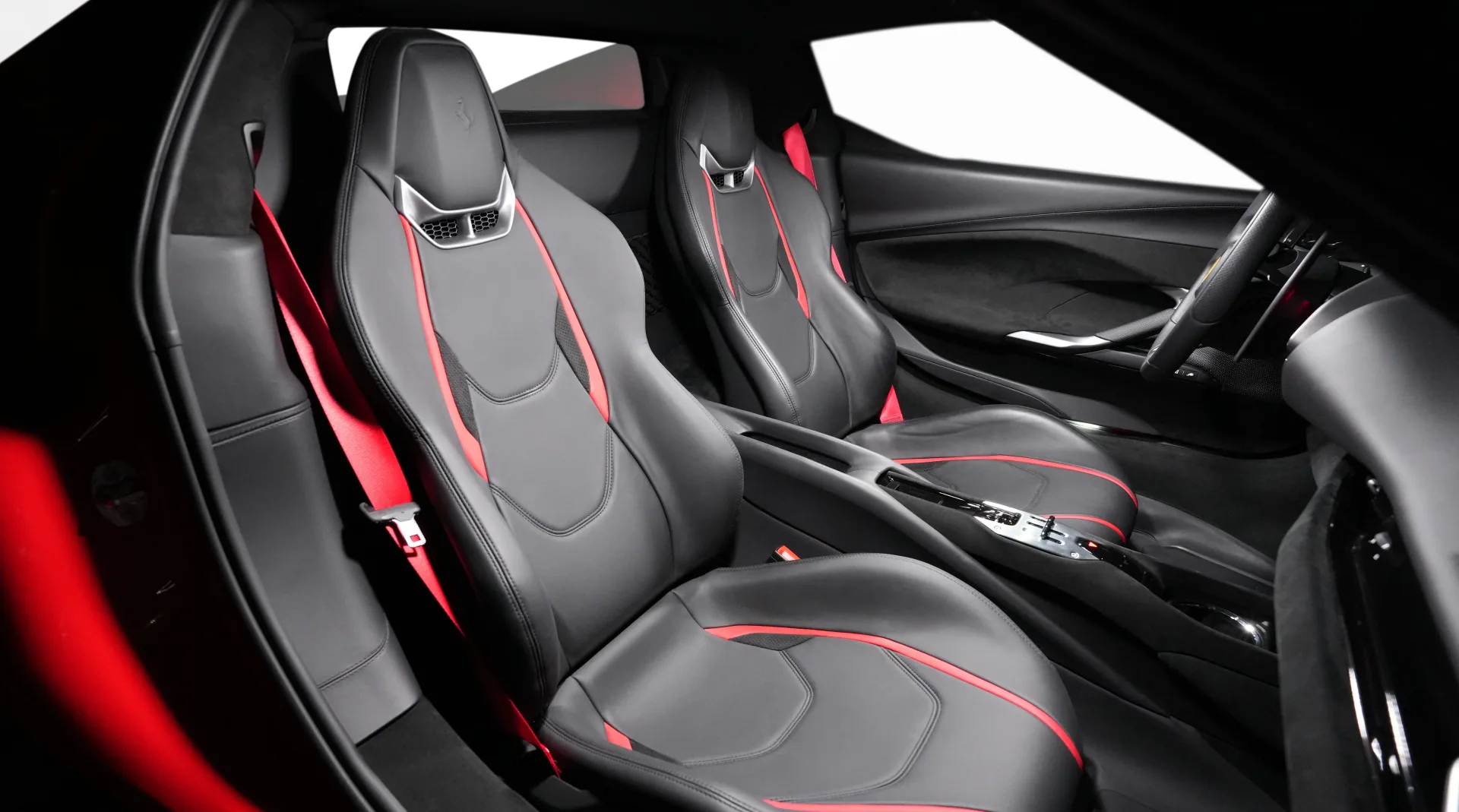
GCC spec simply means a vehicle was manufactured and homologated for sale in the Gulf Cooperation Council region, including the UAE, Saudi Arabia, Qatar, Kuwain, Bahrain and Oman. Non-GCC spec cars, often called American spec, European spec or Canadian spec depending on origin, were built for entirely different markets with different regulations, climates and expectations. At exotic cars dubai buyers trust us to explain these differences honestly rather than gloss over them, because the wrong spec can quietly cost an owner thousands over the life of the car.
Take the Ferrari 296 GTB currently on our floor. Being GCC spec, it was engineered from the factory with the region's climate and regulatory environment in mind, something that carries through the ownership experience in ways that are easy to overlook on a test drive. Shoppers who want to see exactly what a GCC-spec example looks like in person are welcome to view the Ferrari 296 GTB directly, or explore the wider Ferrari collection for context on how the brand's GCC allocations compare across models.
What "GCC Spec" Actually Changes Under the Skin
The badge and silhouette of a GCC spec car and a non-GCC spec car are usually identical, but the engineering underneath is calibrated differently. Manufacturers adjust several things for Gulf-market vehicles, and these adjustments are rarely cosmetic.
- Heavier-duty air conditioning and cooling systems calibrated for sustained desert heat above 45 degrees Celsius
- Reinforced or re-tuned radiators and auxiliary cooling fans for stop-start city driving in high ambient temperatures
- Regional electronics and infotainment, including navigation maps, language packs and GCC-specific warning systems
- Fuel system calibration suited to locally available petrol grades
- Compliance with UAE and GCC registration, safety and emissions requirements from day one
None of this shows up in a brochure photo, but it shows up the first time a non-GCC car's climate control struggles through an August afternoon in Al Quoz.
Why Non-GCC Spec Cars Still Appear on the Market
Non-GCC spec luxury cars enter the UAE through grey imports, personal relocations, or dealers sourcing stock from the US, Europe or East Asia where certain colours, trims or configurations may be cheaper or more readily available. On paper, the headline price can look attractive, which is exactly why buyers need to look past it. A lower purchase price on a non-GCC car can be offset entirely by higher running costs, parts sourcing delays, and a smaller pool of interested buyers when it comes time to sell.
It is not that every non-GCC car is a poor choice. Some are perfectly well maintained and mechanically sound. The issue is one of certainty: a GCC spec car arrives with a documented chain of regional compliance, while a non-GCC import requires the buyer to independently verify everything the factory would otherwise have already handled.
The Warranty and Service Network Question
This is where the gap becomes financial rather than theoretical. Manufacturer warranties, whether from Ferrari, Rolls-Royce, Porsche, Mercedes-Benz or Bentley, are typically tied to the region of first registration. A GCC spec car bought and registered in the UAE is usually eligible for regional warranty support and authorised service centre access without complication. A non-GCC spec car may fall outside standard coverage entirely, leaving the owner reliant on independent specialists or extended aftermarket warranties, if available at all.
For high-performance machinery like a Ferrari 296 GTB, with its hybridised V6 producing 819 hp, this is not a minor detail. Access to Ferrari-trained technicians, genuine parts, and manufacturer diagnostic tools matters for a car operating at this level of engineering complexity. Buyers researching the brand further can consult Ferrari's official site for details on the marque's global service standards.
Resale Value: The Difference Buyers Feel Years Later
Dubai's secondary luxury market has matured considerably, and buyers today are sophisticated. Most ask for GCC spec documentation before even arranging a viewing. This preference directly affects resale value: a GCC spec car tends to hold its value more predictably and sell faster, while a non-GCC spec car often requires a price discount to attract the same level of interest.
Consider the practical differences a seller faces when it comes time to move the car on:
- GCC spec cars attract a wider pool of serious regional buyers, including other dealers
- Non-GCC cars often need additional disclosure and inspection paperwork to reassure buyers
- Financing and insurance providers in the UAE frequently favour GCC spec vehicles, sometimes offering better terms
- Export logistics are simpler for GCC spec cars if a future owner relocates within the Gulf region
This is part of why our own acquisitions, including models like the Ferrari 812 GTS and the Ferrari Roma, are sourced with regional specification as a priority, not an afterthought.
How to Verify Spec Before You Commit
Determining whether a car is genuinely GCC spec is not always as simple as asking the seller. A few checks protect buyers from relying on word alone.
- Request the original registration card (Mulkiya) history and confirm first registration was in the UAE or another GCC country
- Ask for the chassis number and cross-reference it with the manufacturer or an authorised dealer where possible
- Check for region-specific badging, such as GCC emissions stickers or regional compliance plates
- Review service history for stamps from UAE-based authorised dealerships
- Work with an established, transparent showroom rather than an unverified private seller
This last point is often the simplest safeguard. A reputable dealership stakes its reputation on accurate representation, which removes much of the guesswork from the process.
Beyond Ferrari: The Same Principle Applies Across Brands
While the Ferrari 296 GTB is our current spotlight, the GCC versus non-GCC conversation applies equally across the luxury landscape, from the Rolls Royce collection to the Porsche collection and beyond. Any buyer entering the UAE's exotic and luxury segment should treat regional specification as a non-negotiable line item in due diligence, on par with mileage, service history and ownership count.
If you would like to see the difference for yourself, our team at Dourado Luxury Cars in Al Quoz is happy to walk you through the documentation on any vehicle in our collection, including the GCC spec Ferrari 296 GTB currently on display. Visit the showroom or browse our full inventory online to find a car that is as sound on paper as it is on the road.